What is Semantic Search?
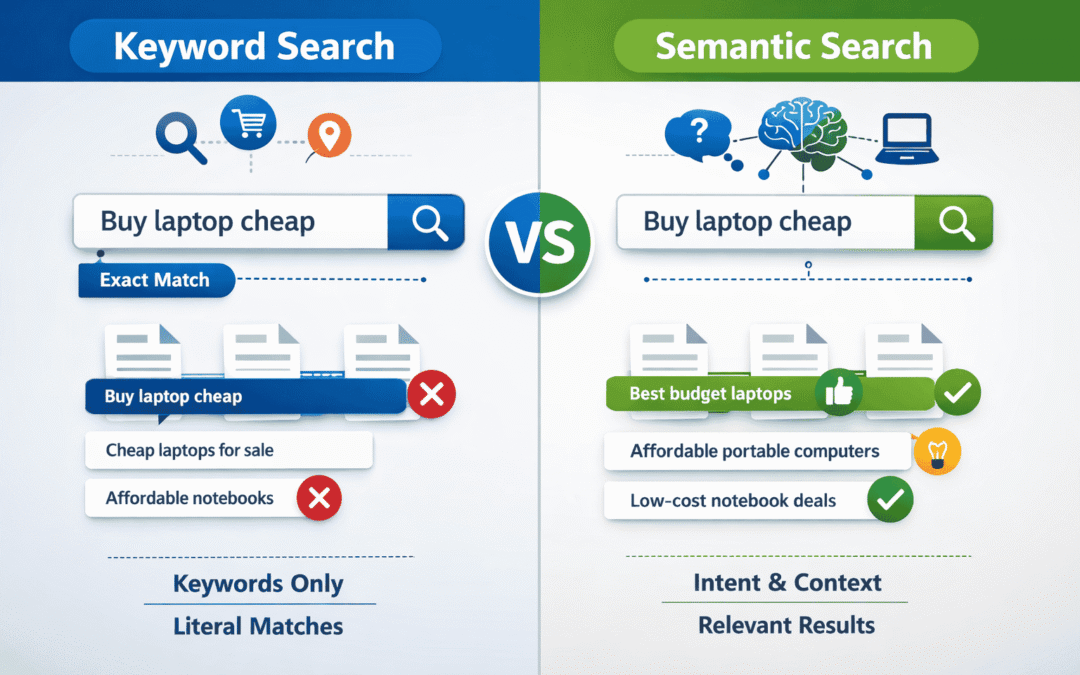
Semantic search is transforming how we find information online. Unlike traditional keyword-based search, semantic search understands the intent and context behind user queries. By analyzing meanings, relationships, and concepts, it delivers more relevant results, making it crucial for businesses, SEO specialists, and AI enthusiasts.
Use Case
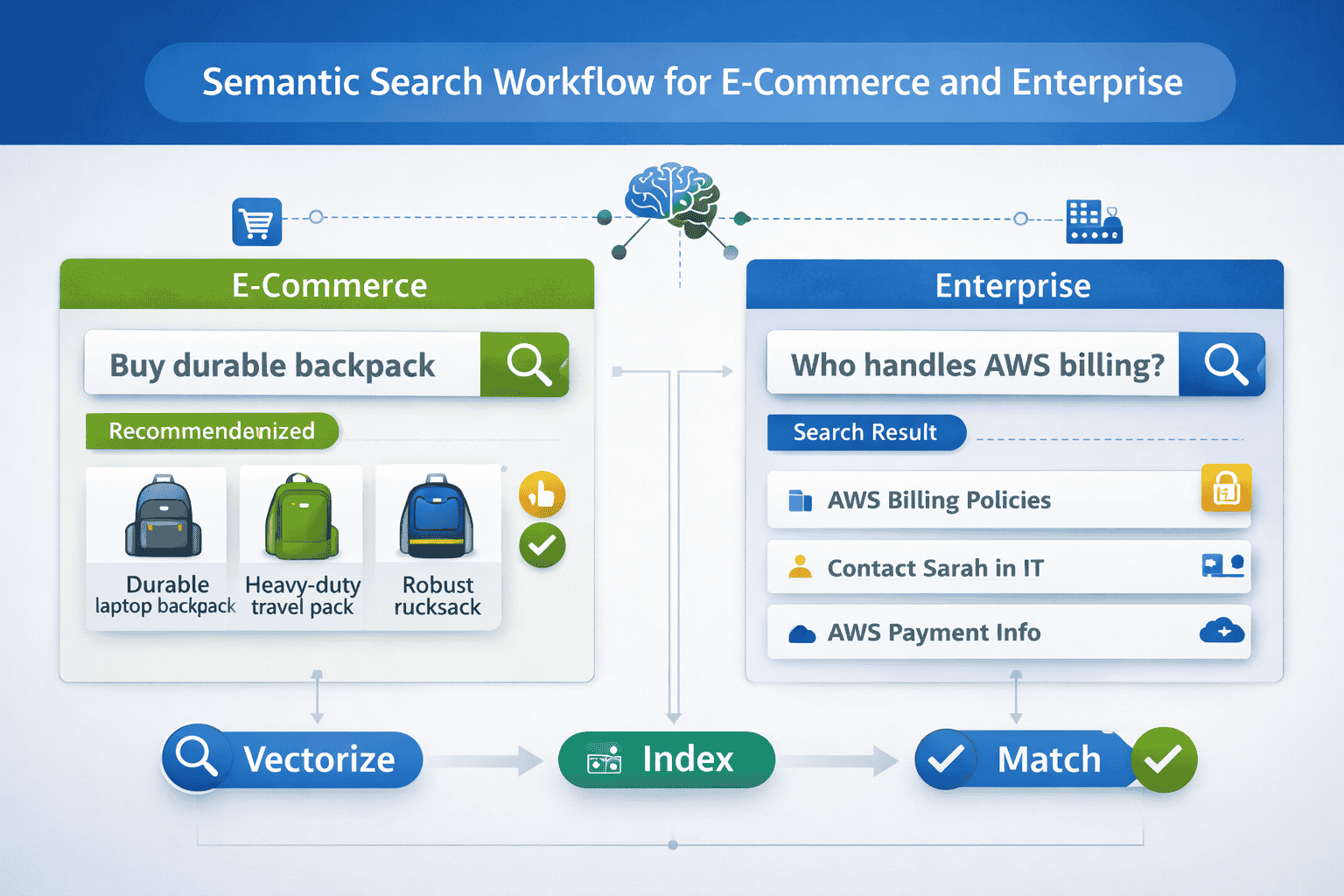
- E-commerce: Recommend products based on user intent rather than exact keywords.
- Content Marketing: Show users content that aligns with the meaning of their query, improving engagement.
- Enterprise Search: Employees find documents quickly by querying naturally.
- Voice Search: Virtual assistants like Alexa and Siri rely heavily on semantic search to understand context.
Steps to Implement Semantic Search (With Warnings)
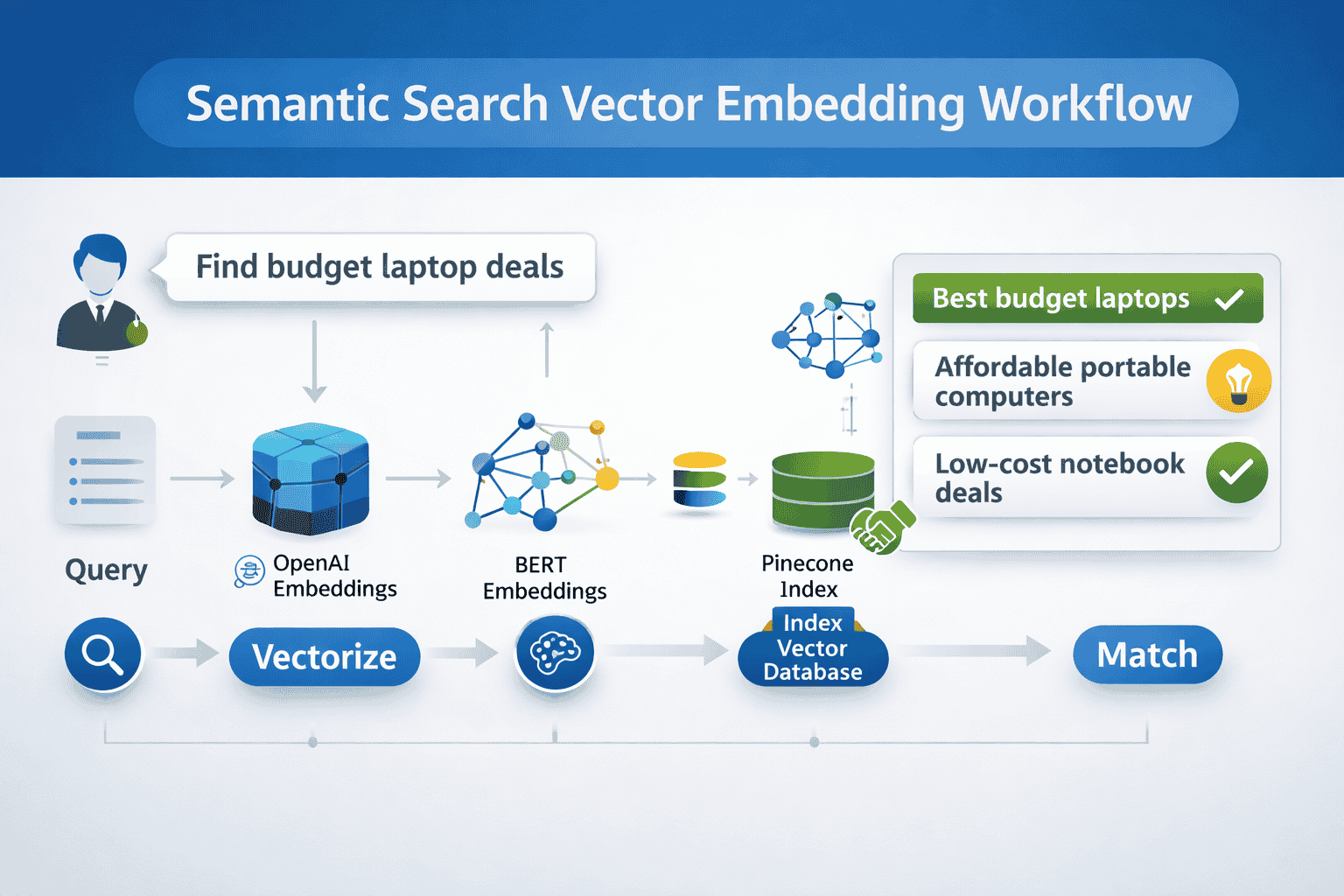
- Choose a semantic search tool or vector database (e.g., Pinecone, Weaviate, or Elasticsearch).
- Convert your documents or content into vector embeddings using models like OpenAI embeddings or BERT.
- Index these embeddings in your vector database.
- Build your search interface to match query embeddings with document embeddings.
- Test for accuracy and relevance.
Warnings:
- Ensure your embeddings model is suitable for your domain; a generic model may misinterpret technical queries.
- Regularly update your database; stale embeddings reduce relevance.
- Monitor search latency; vector searches can be compute-intensive.
Audience-Specific Steps
For Marketers:
- Map top queries and FAQs to content embeddings to boost SEO traffic.
- Combine semantic search with analytics to find content gaps.
For Developers:
- Integrate semantic search APIs into your website or product.
- Optimize embeddings storage for faster retrieval.
For Enterprise Teams:
- Enable natural language search in internal tools like Confluence or SharePoint.
- Train models on company-specific data for better accuracy.
Pro Tips
- Use hybrid search: combine semantic + keyword search for best results.
- Continuously refine embeddings using feedback loops.
- Monitor query drift: the meaning of terms changes over time.
- Optimize for long-tail queries, which benefit most from semantic understanding.
What You Learned in This Post
- How semantic search improves search intent understanding
- Steps to implement semantic search in Python
- Benefits of semantic search for e-commerce and enterprise search
- Tools and embeddings to use for AI-powered search optimization
- Differences between keyword search vs semantic search